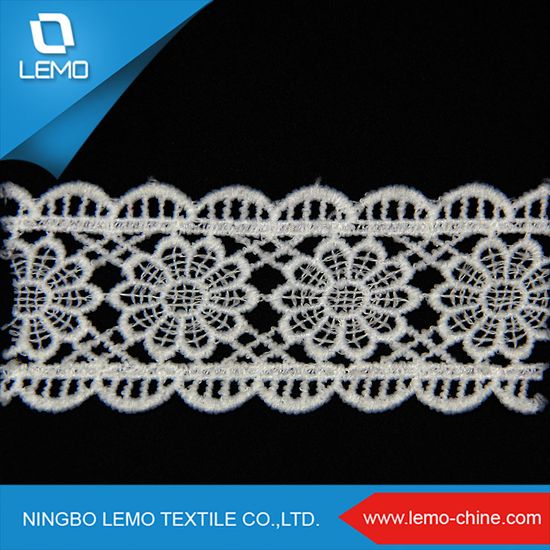
White Tc Diamond Eyelet Embroidery Lace Trim Scalloped Edge for Garment Accessories

Cotton Lace for Embroidery Lace Evening Dress

Embroidery Elegant Flower Pattern Milk Yarn Lace

I have found results from2000+products and900+suppliers aboutWholesale diamond lace


When sourcing diamond lace, the quality is determined by the base material, the stone grade, and the attachment method. Ensure the base mesh is made of high-density nylon or polyester to prevent tearing under the weight of the stones. For the 'diamonds,' verify if they are AAA-grade glass rhinestones, resin, or acrylic; glass offers the highest refractive index and brilliance. Additionally, check the stone density (stones per square inch) and the fixation technique—hot-fix is common for mass production, while hand-sewn or prong-set stones offer superior durability for high-end bridal or evening wear.
Compliance is critical for international trade. Buyers should demand OEKO-TEX Standard 100 certification to ensure the lace is free from harmful substances like formaldehyde and azo dyes. For shipments to the US, ensure the product meets CPSIA lead content requirements, especially if used in children's clothing. For the EU market, verify REACH compliance regarding the chemical composition of the adhesives used in hot-fix lace to avoid customs seizures or product recalls.
Diamond lace is primarily used in bridal wear, evening gowns, stage costumes, and luxury home textiles. Functional requirements vary by use: for apparel, the lace must have soft edge finishing to prevent skin irritation and sufficient flexibility to drape over body curves. For accessories like veils, lightweight construction is essential. Always request a colorfastness test report (Grade 4 or higher) to ensure the dye does not bleed onto the primary garment fabric during dry cleaning or perspiration.
To optimize costs, calculate the Total Cost of Ownership (TCO), including the unit price, shipping volume (lace is lightweight but bulky), and potential import duties. Many suppliers on Made-in-China.com offer tiered pricing; for example, orders exceeding 500 yards may trigger a 15-25% discount. Consider the width of the lace (e.g., 15cm vs. 130cm) as wider fabric often provides better yield for garment cutting, reducing waste and lowering the effective cost per garment.
The biggest risks are stone shedding during transit and color variance between batches. To mitigate this, require the supplier to use vacuum packaging or reinforced rolls to minimize friction. Always request a pre-production sample (PPS) and a top-of-production (TOP) sample to verify that the 'diamond' sparkle and mesh color match your specifications before the final balance payment is made.
Focus negotiations on MOQ flexibility and spare parts. Ask the supplier to include 3-5% extra loose stones at no cost for repairs. Negotiate for customized packaging (e.g., specific roll lengths) to fit your production line. If sourcing from Made-in-China.com, prioritize Audited Suppliers and use their high-level verification reports as leverage to ensure the factory has the capacity for consistent quality.
Utilize secure payment escrow services provided by reputable platforms like Made-in-China.com. Never wire the full amount upfront; a standard 30/70 payment term (30% deposit, 70% after passing third-party inspection and before shipment) is recommended. Ensure the Proforma Invoice (PI) explicitly states the stone material, lace width, and 'no-shedding' quality guarantees.
Due to the delicate nature of the embellishments, Air Freight is preferred for high-value bridal lace to reduce the time spent in humid shipping containers, which can weaken adhesives. For sea freight, ensure the use of desiccant silica gel packs inside the polybags to prevent moisture from affecting the stone foil backing. Ensure the HS Code (typically 5804 for lace) is correctly declared to avoid tariff misclassification.