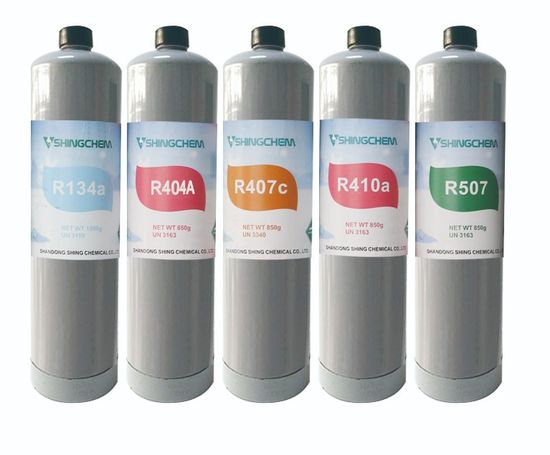
Refrigerant gas r123 price manufacturers
I have found results from400+products and200+suppliers aboutRefrigerant gas r123 price
Sourcing guidance for Refrigerant Gas R123 Price
What are the key technical specifications and usage scenarios for Refrigerant Gas R123?
R123 (Dichlorotrifluoroethane) is primarily used as a low-pressure refrigerant in centrifugal chillers for large commercial and industrial air conditioning systems. It is highly valued for its high thermodynamic efficiency and low operating pressure. When sourcing, ensure the purity level is ≥99.8% to prevent system corrosion and maintain cooling efficiency. It is also used in some large-scale heat recovery applications and as a specialized cleaning agent in industrial processes.
What compliance standards and environmental regulations must R123 meet?
As an HCFC (Hydrochlorofluorocarbon), R123 is subject to the Montreal Protocol. Buyers must verify that the product meets AHRI 700 standards for refrigerant purity. It is critical to check the Ozone Depletion Potential (ODP) and Global Warming Potential (GWP) ratings. Ensure the supplier provides a Material Safety Data Sheet (MSDS) and a Certificate of Analysis (COA). Note that many countries have phase-out schedules for HCFCs, so you must confirm the legality of import for your specific region.
How should the quality and cylinder safety of R123 be validated?
Quality validation should involve moisture content testing (typically <10ppm) and acidity testing (<0.1ppm) to ensure the longevity of the compressor. Cylinders must comply with international pressure vessel standards such as DOT-39 (US), EN 13322 (EU), or ISO 11118. Always check for refillable vs. non-refillable cylinder regulations in your country, as many jurisdictions have banned disposable cylinders to prevent leakage.
What factors influence the price and economic feasibility of R123 procurement?
The price of R123 is heavily influenced by raw material costs (fluorspar), production quotas, and logistics surcharges for hazardous materials. To optimize costs, consider bulk ISO tank containers for large-scale operations, which can reduce the unit price by 15-25% compared to small cylinders. For B2B buyers on Made-in-China.com, it is advisable to lock in prices with long-term supply contracts to hedge against market volatility caused by environmental policy shifts.
Cross-Border Procurement & Risk Management for R123
What are the primary risks and safety precautions in cross-border shipping for R123?
R123 is classified as Class 2.2 Non-flammable Gas (though it has slight toxicity) for international transport. You must ensure the supplier uses UN-certified packaging and provides a Dangerous Goods (DG) Declaration. Risk management involves verifying the stability of the valves to prevent leakage during transit. It is highly recommended to use reputable freight forwarders who specialize in chemical logistics to navigate complex customs clearances.
How can buyers ensure transaction security and supplier reliability?
When sourcing via Made-in-China.com, prioritize Audited Suppliers who have undergone third-party onsite inspections. Use Secured Payment services to ensure funds are only released upon proof of shipment and compliance with quality specs. Requesting a pre-shipment inspection (PSI) by agencies like SGS or Intertek is a standard industry practice to verify the gas weight and purity before the balance payment is made.
What are the negotiation strategies for B2B buyers regarding R123?
Negotiate based on volume-based pricing tiers and purity guarantees. Ask for inclusive pricing (CIF/CIP) to understand the full landed cost, as hazardous material shipping rates fluctuate wildly. Discuss lead times clearly, as production quotas may limit availability during peak seasons. A strong negotiation point is the return or recycling policy for empty ISO tanks or cylinders, which can significantly impact long-term operational costs.
What international trade policies affect the import of R123?
Buyers must be aware of import quotas and licenses required by their national environmental agencies (e.g., the EPA in the US or EEA in Europe). Some countries impose anti-dumping duties or carbon taxes on specific refrigerants. Always consult with a customs broker to confirm the HS Code (typically 2903.72) and associated tariffs to avoid unexpected costs at the border.