
Satisfies 1 requirement
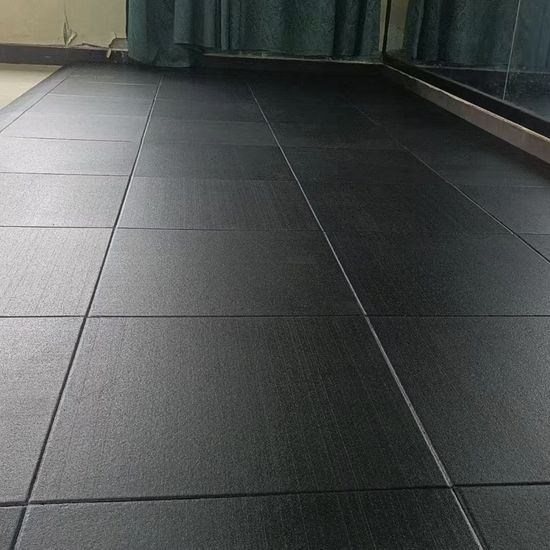
Interlocking Sports Court Floor Tiles for Kingergarten Basketball Volleyball Courts
US$7.54-7.56
100 Square Meters(MOQ)

I have found results from100000+products and30000+suppliers aboutSports floor tiles




When sourcing sports floor tiles, the material choice determines durability and safety. Polypropylene (PP) is the industry standard for outdoor courts due to its UV stability and weather resistance, while Ethylene Vinyl Acetate (EVA) or Rubber is preferred for indoor gyms for superior shock absorption. Ensure the tiles have a Shore A Hardness rating appropriate for the activity (e.g., 60-70 for weightlifting areas) and a thickness of at least 10mm to 20mm for high-impact zones.
To ensure market entry and user safety, verify that products meet EN 14904, which is the European standard for indoor sports surfaces. For North American markets, check for ASTM F2772 compliance. Additionally, ensure the materials are REACH or RoHS certified to guarantee they are free from harmful chemicals like lead or phthalates, and possess a Class B1 Fire Rating for indoor commercial installations.
The quality of the interlocking system is critical for preventing 'floor migration' or buckling. Look for reinforced loop-and-peg designs that allow for thermal expansion and contraction. High-quality tiles should feature a multi-point connection system (at least 4-6 locks per side) to ensure the surface remains flat under lateral force, such as during basketball or tennis pivots.
For outdoor tiles, a perforated surface (open-grid design) is mandatory to allow for rapid drainage and anti-slip performance during rain. For indoor tiles, focus on noise reduction coefficients (NRC) and friction coefficients (0.4 to 0.7) to prevent athlete slips while allowing for controlled sliding. Anti-bacterial coatings are also a significant value-add for commercial gym environments.
Always request a pre-shipment inspection (PSI) by a third-party agency like SGS or Intertek. Specifically, ask for a 'drop test' and 'colorfastness test' to ensure the tiles won't crack under impact or fade under sunlight. Utilizing Made-in-China.com's Secured Trading services can provide an extra layer of protection by ensuring payment is only released after the goods pass quality verification.
Focus on Total Cost of Ownership (TCO) rather than just the unit price. Negotiate for spare tiles (usually 1-3% of the total order) to be included for free to cover future repairs. If you are a repeat buyer, negotiate for OEM branding on the underside of the tiles and ask for tiered pricing where the discount increases by 5-10% once your annual volume exceeds a specific container count.
Sports tiles are heavy and bulky, making FCL (Full Container Load) the most economical shipping method. Ensure the supplier uses heavy-duty pallets with shrink-wrap and edge protectors to prevent corner damage during transit. For international trade, clarify the Incoterms; FOB (Free On Board) is generally recommended for experienced buyers to maintain control over freight costs and customs clearance via their own forwarder.
Verify the supplier's Business License and Export Qualification on Made-in-China.com. Ensure the Harmonized System (HS) Code used (typically 391890 for plastic floor coverings) matches your local customs regulations to avoid unexpected anti-dumping duties or tariffs. Always use documented communication channels to record all technical specifications and lead-time promises.