Satisfies 1 requirement
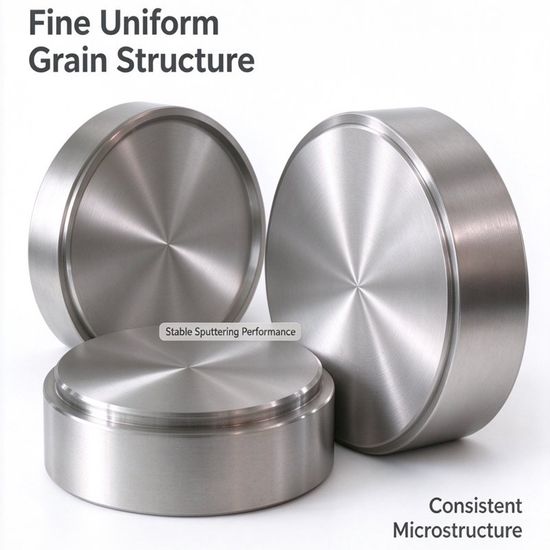
Titanium Round Sputtering Target, 4n Pure Titanium Low Impurity, for 3c Electronics Magnetron Sputtering, Accept Custom Diameter & Thickness
US$1.00-99.00
10 Pieces(MOQ)

I have found results from4000+products and1000+suppliers aboutMagnetron sputtering target


Buyers must prioritize Purity Levels, typically ranging from 99.9% (3N) to 99.9999% (6N) depending on the application (e.g., semiconductors require higher purity than decorative coatings). Additionally, Relative Density should ideally be >99% to minimize arcing and ensure a stable deposition rate. Grain Size uniformity is also critical, as finer grains lead to more consistent film thickness and longer target life.
Planar targets are cost-effective and easier to install, making them suitable for small-batch production or R&D. However, Rotatable targets offer significantly higher material utilization (up to 80% compared to 30% for planar) and are preferred for large-scale industrial applications like architectural glass coating or solar cell production due to their ability to run longer without maintenance.
For targets with low thermal conductivity or high brittleness (like ceramics), Indium Bonding to a copper backing plate is the industry standard. It ensures optimal thermal dissipation and prevents target cracking under high power. Ensure the supplier provides a C-scan (Ultrasonic Test) report to verify a bonding ratio of >95% to avoid localized overheating.
Suppliers should provide a Certificate of Analysis (COA) for every batch, detailing impurity elements via GDMS or ICP-OES testing. For electronics applications, RoHS and REACH compliance is mandatory. If the target contains hazardous materials, ensure the supplier provides a comprehensive Material Safety Data Sheet (MSDS) for customs clearance.
Always request a pre-shipment sample for independent lab testing if the order volume is high. Use Made-in-China.com's Secured Trading services to ensure payment is only released after the Third-Party Inspection (TPI) confirms the material composition matches the technical data sheet.
For targets like Gold (Au), Silver (Ag), or Platinum (Pt), negotiate a 'Fabrication Fee + Market Spot Price' model. This protects both parties from market volatility. For base metals, seek volume-based discounts, where a 10-15% price reduction is common for annual procurement contracts exceeding 50 units.
Ceramic targets (like ITO or AZO) are highly brittle. Insist on vacuum-sealed moisture-proof packaging followed by custom wooden crates with shock-absorbing foam. Ensure the Incoterms are CIF or CIP, and verify that the insurance policy covers breakage during transit, not just total loss.
Some high-purity metals or specific alloys may be classified as Dual-Use items (civilian and military). Work with experienced exporters on Made-in-China.com who can assist in obtaining the necessary Export Licenses to prevent shipments from being seized by customs for lack of proper documentation.