
Satisfies 1 requirement
Commercial Heat Transfer Pet Printable Vinyl Film for Home Appliance Button Panel Icons
US$0.40-0.54
500 Square Meters(MOQ)

I have found results from70000+products and20000+suppliers aboutHeat transfer pet film


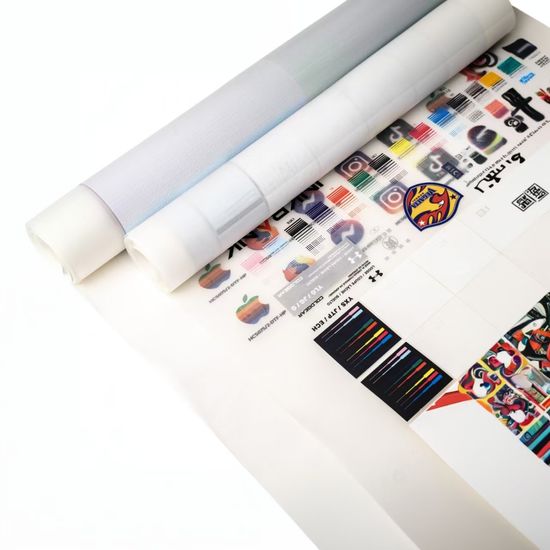


Buyers should prioritize coating thickness (typically 75μm to 100μm) and the release type (Hot Peel vs. Cold Peel). High-quality film must have a uniform antistatic coating to prevent powder sticking to non-image areas. Ensure the film supports high ink absorption rates to prevent bleeding and maintains dimensional stability under high temperatures (140°C-160°C) to avoid shrinkage or warping during the curing process.
Request washability test reports; industry standards usually require the film to withstand 50+ domestic wash cycles without cracking or fading. Evaluate the color reproduction accuracy and the softness of the hand-feel after transfer. For B2B bulk orders, it is essential to test the ink-loading capacity to ensure the film can handle heavy white ink layers without 'oil return' or surface sweating.
To enter international markets, the film must comply with OEKO-TEX® Standard 100, ensuring it is free from harmful substances. For the US market, CPSIA compliance is necessary if the film is used for children's apparel. Additionally, verify REACH certification for European exports to ensure chemical safety in the PET base and coating layers.
Single-sided matte film is cost-effective for standard T-shirt printing, while double-sided matte film offers better friction for printer rollers, reducing feeding errors. For high-end fashion, consider specialty films like Glitter, Reflective, or Luminous DTF films. Always match the film type to your DTF printer's vacuum system and the specific fabric type (cotton, polyester, or blends).
PET film is highly sensitive to humidity. Insist that the supplier uses vacuum-sealed plastic packaging with desiccant packets inside each roll's box. Ensure the outer cartons are palletized and shrink-wrapped to prevent water ingress during transit. On Made-in-China.com, prioritize Audited Suppliers who provide photos of the loading process and moisture-proof packaging.
Standard MOQs for PET film usually start at 10-50 rolls. To get the best pricing, offer a staggered volume forecast; suppliers are often willing to reduce prices by 10-15% for container-level loads. Always negotiate Incoterms clearly (FOB vs. CIF) and request a sample roll for testing before committing to a bulk purchase to ensure compatibility with your specific ink and powder brands.
Utilize Secured Payment services provided by Made-in-China.com to ensure funds are only released upon proof of shipment. For quality assurance, hire a third-party inspection agency to perform a 'Random Sampling Test' focusing on coating uniformity and edge neatness before the balance payment is made. This prevents the common 'bait and switch' risk where samples differ from bulk production.
For sample testing (1-2 rolls), use International Express (DHL/FedEx/UPS) for speed and door-to-door clearance. For mid-sized orders (20-100 rolls), LCL (Less than Container Load) sea freight or Air Freight is more economical. For large-scale distribution, FCL (Full Container Load) is the most cost-effective method to minimize the unit shipping cost and reduce the risk of handling damage.