
Satisfies 1 requirement
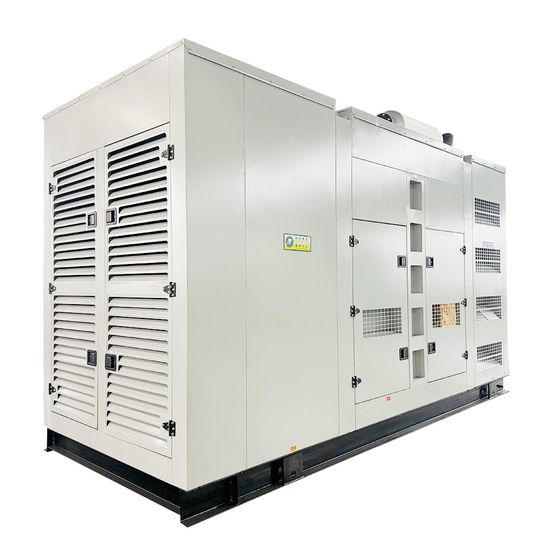
800kw Containerized 1000kVA Electric Diesel Generator with Soundproof Cover
US$202,544.00-218,125.00
1 Piece(MOQ)

I have found results from60000+products and20000+suppliers aboutContainerized generator




Selecting the correct capacity requires calculating the total peak load and continuous running load of your facility. For industrial use, ensure the generator operates at 70-80% of its rated capacity for optimal fuel efficiency and longevity. Regarding engine brands, prioritize globally recognized names like Cummins, Perkins, or MTU if you require a worldwide service network, or high-quality Chinese brands like Yuchai or Weichai for a more cost-effective solution with reliable performance in emerging markets.
The enclosure must be a standard ISO sea freight container (20ft or 40ft) to facilitate easy shipping. It should feature high-density rock wool insulation for sound attenuation (targeting 75dB(A) @ 7m or lower). Ensure the container is treated with C5-M marine-grade anti-corrosion paint if the unit will be deployed in coastal or high-humidity environments. Additionally, verify the inclusion of integrated fuel tanks with a minimum 8-12 hour runtime capacity at full load.
The unit must comply with CE (European) or EPA (US) emission standards depending on the destination country. Safety features should include an automatic fire suppression system, emergency stop buttons accessible from the exterior, and leak-proof bunded bases to prevent environmental contamination. For electrical safety, ensure the control system uses high-end PLC controllers (like Deep Sea or ComAp) that support remote monitoring and automatic transfer switches (ATS).
Always request a Load Bank Test Report showing the generator's performance at 25%, 50%, 75%, 100%, and 110% load. Demand a video inspection of the cold start and a check of the alternator's insulation resistance. For large-scale projects, hiring a third-party inspector (such as SGS or BV) to verify the copper winding quality and the thickness of the container steel is highly recommended.
The biggest risks include damage during maritime transit and non-compliance with local grid codes. To mitigate this, ensure the supplier uses heavy-duty internal bracing to secure the engine and alternator. Always specify the voltage (e.g., 380V/400V/480V) and frequency (50Hz/60Hz) clearly in the contract to avoid receiving unusable equipment.
Focus on the Total Cost of Ownership (TCO) rather than just the initial price. Negotiate for extended warranties (e.g., 2 years or 2000 hours) and the inclusion of a 'two-year spare parts kit' (filters, belts, sensors) in the initial price. For bulk orders, ask for customized branding (OEM) and a discount on the synchronization system if purchasing multiple units.
Since the generator is built into a container, it can be shipped as Standard SOC (Shipper Owned Container). This significantly reduces packaging costs. However, you must ensure the supplier provides a CSC Certification (Container Safety Convention); without this, shipping lines may refuse to load the unit onto the vessel.
Use secured payment terms such as a Letter of Credit (L/C) or the secured trading services provided by Made-in-China.com. Never pay 100% upfront; a standard 30% deposit and 70% balance payment after successful FAT (Factory Acceptance Test) and presentation of the Bill of Lading is the industry norm for protecting buyer capital.