
Satisfies 1 requirement
Evpro 8300 Split 240kw 1600kw Factory Price New Energy Efficient Commercial Station EV Charger Home for Electric Car
US$100,000.00
1 Piece(MOQ)

I have found results from30000+products and8000+suppliers aboutCar charger price


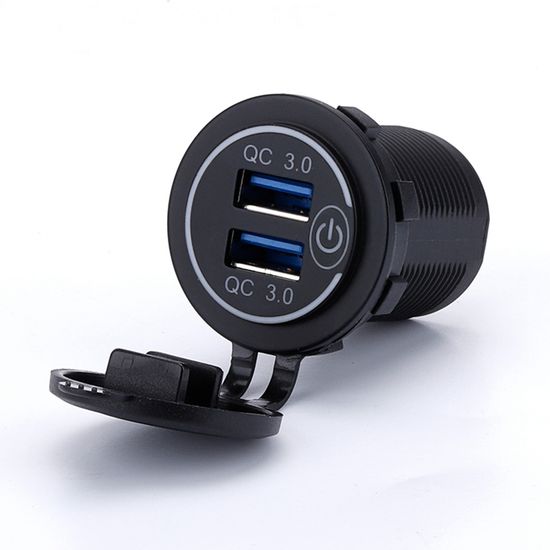


When comparing prices, you must look beyond the surface and evaluate the Total Wattage (W) and Power Delivery (PD) / Quick Charge (QC) protocols. A charger priced lower may only offer 12W (5V/2.4A), whereas high-performance models for modern smartphones and laptops require 30W, 45W, or even 100W. Ensure the price includes GaN (Gallium Nitride) technology if you require high power in a compact size, as this typically commands a 15-25% price premium but offers superior heat dissipation and efficiency.
The housing material significantly affects the price point. Aluminum alloy shells are more expensive than ABS+PC plastic but offer better durability and thermal management. Additionally, check the internal PCBA (Printed Circuit Board Assembly) quality; premium chargers include independent dual-circuit designs to ensure that using two ports simultaneously does not drop the charging speed, a feature often missing in budget-tier products.
Price should never compromise safety. For the US market, ensure UL or ETL listing and FCC certification. For the EU, CE, RoHS, and REACH are mandatory. If you are sourcing for the Japanese market, PSE certification is required. Suppliers on Made-in-China.com who provide these test reports may have slightly higher quotes, but they prevent customs seizures and product recalls.
The configuration of USB-A vs. USB-C ports is a major price driver. As the industry shifts toward USB-C, chargers with multiple Type-C ports supporting PPS (Programmable Power Supply) are priced higher. A standard 1A1C (one USB-A and one USB-C) configuration is currently the most cost-effective 'sweet spot' for general retail, while triple-port or 4-port chargers are positioned as premium SKUs.
The primary risk is false labeling of wattage, where a charger labeled as 38W might only output 15W. Another risk is electromagnetic interference (EMI), which can disrupt car radio or GPS signals. To mitigate this, always request a Golden Sample for lab testing and use Made-in-China.com's Secured Trading services to ensure the mass-produced goods match the approved sample specifications.
Focus on Volume-Based Tiered Pricing. For electronics, a jump from 1,000 units to 5,000 units can often reduce the unit price by 5-10%. Additionally, negotiate on packaging customization (OEM); sometimes opting for minimalist eco-friendly packaging can reduce both the unit cost and the volumetric shipping weight, leading to significant logistics savings.
Car chargers are relatively dense and heavy. For small batches, Air Express (DHL/FedEx) is fast but expensive. For bulk orders, Sea Freight (LCL) is preferred. Ensure the supplier uses 5-layer corrugated export cartons and anti-static inner packaging to prevent damage during transit. Always clarify the Incoterms (typically FOB or EXW) to understand exactly when the risk of loss transfers to you.
Prioritize Audited Suppliers on Made-in-China.com who have undergone on-site inspections by third-party agencies like SGS or Intertek. Use Escrow-based payment methods where funds are only released upon confirmation of shipment or successful third-party Pre-Shipment Inspection (PSI) to verify the quantity and quality of the chargers.